

Bike Sharing Market to Reach USD 20.37 Billion by 2035, Growing at 9.3% CAGR
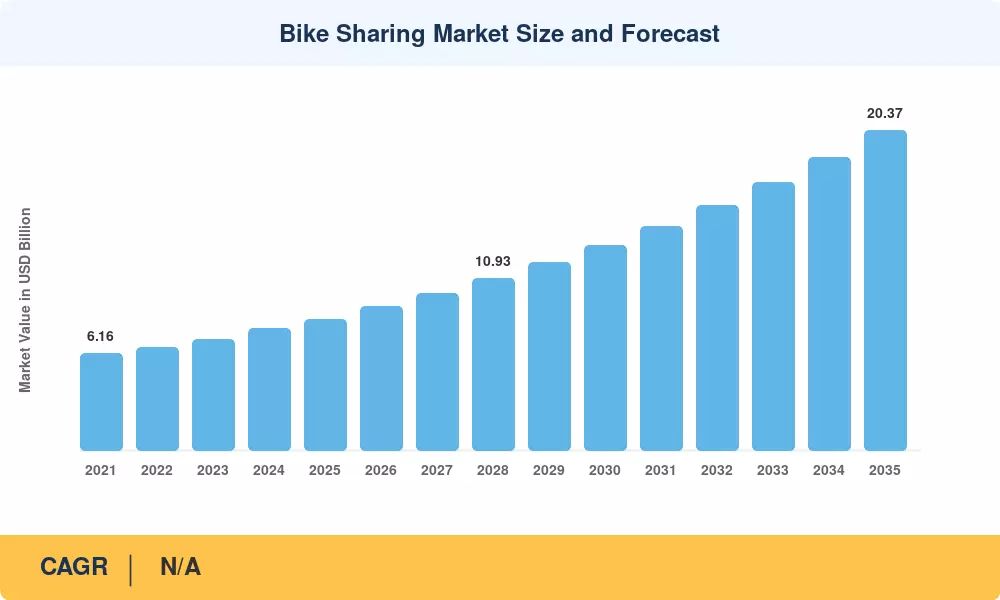
Bike Sharing Market
Asia-Pacific leads the Bike Sharing Market with a 47% revenue share, anchored by China's fleet exceeding 20 million shared bicycles.
North America is growing fastest at 11.5% CAGR, propelled by U.S. federal micro-mobility funding.”
NEW YORK, NY, UNITED STATES, August 27, 2026 /EINPresswire.com/ -- According to Market Research Future, the Bike Sharing Market is projected to grow from USD 9.15 Billion in 2026 to USD 20.37 Billion by 2035, registering a CAGR of 9.3% during the forecast period (2026–2035). This robust growth reflects the increasing adoption of shared mobility solutions across urban centers worldwide, as cities grapple with traffic congestion, environmental concerns, and the need for sustainable first-mile and last-mile connectivity solutions. The integration of electric bicycles, advanced mobile applications, and IoT-enabled tracking systems has revolutionized the bike sharing experience, making it more accessible and appealing to diverse user demographics. The Bike Scooter Rental Market has experienced parallel growth, driven by similar urban mobility trends and consumer preferences for flexible, on-demand transportation alternatives that complement existing public transit networks. The Shared Mobility Market continues to expand as cities embrace integrated mobility solutions that reduce private vehicle dependency and promote sustainable urban development, with bike sharing emerging as a cornerstone of these comprehensive mobility strategies.— Swapnil Palwe
Market Overview
Bike sharing systems have emerged as a transformative urban mobility solution, providing users with on-demand access to bicycles for short-term transportation needs. These systems operate through networks of bicycles available for hire at docking stations or through dockless, geofenced service areas. Users typically access bikes through mobile applications, scan QR codes, and pay per ride or through subscription models, making bike sharing an accessible and convenient transportation option for commuters, tourists, and residents alike. The Bike Scooter Rental Market complements traditional bike sharing by offering electric scooter alternatives for urban micro-mobility, while the Shared Mobility Market encompasses a broader ecosystem of car-sharing, ride-hailing, and micro-mobility solutions that together create a comprehensive urban transportation network.
The key growth drivers propelling this market expansion include rapid urbanization and increasing traffic congestion in metropolitan areas, which have made bike sharing an attractive alternative to private vehicle ownership for short-distance travel. Growing environmental consciousness and the urgent need to reduce carbon emissions are encouraging consumers and policymakers to embrace sustainable transportation modes. Government investments in cycling infrastructure, including dedicated bike lanes and smart docking stations, have created a supportive environment for bike sharing system deployment . The integration of advanced technologies such as GPS tracking, IoT-enabled systems, and user-friendly mobile applications has enhanced operational efficiency and user convenience, attracting a broader consumer base .
Market Segmentation
The bike sharing market is segmented based on bike type, sharing system, and duration to provide comprehensive insights into the industry landscape.
By Bike Type: The market is divided into Traditional/Regular Bike and E-Bike segments. E-bikes are experiencing rapid adoption, appealing to users who prefer easier navigation through hilly terrains and longer travel distances without physical fatigue. These electric bikes are particularly popular among commuters and individuals with longer daily travel requirements. Traditional/regular bikes remain a significant segment, serving casual riders, tourists, and users seeking cost-effective short-distance transportation options. The integration of e-bikes into bike sharing fleets has expanded the market's addressable audience by making bike sharing accessible to users with varying fitness levels and mobility needs .
By Sharing System: The market is categorized into Docked and Dockless systems. Docked systems rely on fixed docking stations where users must pick up and return bicycles, offering advantages in terms of organized bike placement, ease of tracking and maintenance, and consistent user experience. These systems are well-suited for cities with established infrastructure and urban planning that can accommodate dedicated docking stations and are often preferred by municipalities for their ability to manage inventory efficiently and promote safe usage . Dockless systems, which allow users to pick up and drop off bikes anywhere within a specified geographic area, are gaining significant traction due to their convenience and flexibility. The freedom to park bikes in various locations aligns with the lifestyles of modern urban dwellers, eliminating the need to locate docking stations and encouraging spontaneous usage . The dockless model is particularly popular in cities where infrastructure is mobile and less constrained, though it faces challenges related to bike maintenance, distribution, and parking compliance .
By Duration: The market is segmented into Short Term and Long Term rentals. Short-term bike rentals currently dominate the segment, capturing a significant share of user preferences driven by convenience and flexibility that appeals primarily to tourists and occasional users seeking quick rides. Long-term bike rentals are gaining traction, particularly among urban commuters and environmentally-conscious consumers looking for sustainable transportation alternatives, often available through subscription-based models that provide cost-effective options for regular users .
By Region: The market analysis covers North America, Europe, South America, Asia Pacific, and the Middle East and Africa.
🛒 You can buy this market report at:
https://www.marketresearchfuture.com/checkout?currency=one_user-USD&report_id=10352
Regional Analysis
Asia Pacific represents the largest regional market for bike sharing, driven by strong adoption of bike sharing services in densely populated urban areas, particularly in countries like China and India. These nations are witnessing a rise in bike sharing programs due to their high population density, urban congestion, and government initiatives promoting eco-friendly transportation. China accounts for approximately 75% of the regional share, with companies like Ofo and Mobike leading the charge, while India is gradually adopting bike sharing as a viable urban transport solution, holding around 15% of the market share . The Asia Pacific region benefits from the presence of prominent bike-sharing companies and a culture of using bicycles for commuting and short trips. Government initiatives to promote green transport are catalyzing this growth, with the Smart Cities Mission in India promoting cycling as a sustainable urban transport mode with significant planned investments . The competitive landscape in Asia Pacific is marked by a mix of local and international players with significant investments in technology and infrastructure, positioning the region for substantial market growth as urban areas continue to expand .
North America is experiencing significant growth in the bike sharing market, driven by increasing urbanization, environmental awareness, and supportive government policies. The United States is the largest market, holding approximately 70% of the regional share, followed by Canada at around 20% . Cities across the United States and Canada are integrating bike sharing into their transportation systems, making it a convenient and sustainable option for urban commuters. The availability of well-established bike-sharing providers, including Lime, Bird, and Citi Bike, dominates the landscape, offering diverse services tailored to urban commuters. The competitive environment is characterized by partnerships with local governments and transit agencies, ensuring integration with public transport systems. As cities expand their bike lanes and promote eco-friendly transport, the market is poised for further expansion, attracting investments and innovations . Government initiatives such as the U.S. Department of Transportation's Bicycle Safety Program allocate funds to improve safety standards for bike-sharing systems, enhancing user safety and fostering growth in urban installations .
Europe is at the forefront of the bike sharing market, driven by a strong emphasis on sustainability and urban mobility, accounting for approximately 60% of the global market share. Countries like Germany and France are leading the way, with cities implementing policies to reduce carbon emissions and promote healthier lifestyles. Germany, with players like Nextbike, and France, featuring BlaBlaBike, showcase a competitive landscape rich in innovation . Regulatory frameworks across Europe encourage the adoption of bike sharing, with the presence of established operators and new entrants fostering a dynamic market environment. European cities are increasingly integrating bike sharing with public transport, enhancing user experience and accessibility, which is crucial for urban planning and development. Initiatives like the European Commission's European Mobility Week promote cycling through awareness campaigns and financial incentives to integrate bike-sharing programs with public transport systems . Transport for London's Cycle Improvement Plan represents a significant investment aimed at expanding London's cycling infrastructure, encouraging the growth of bike-sharing schemes .
The Middle East and Africa region is gradually emerging in the bike sharing market, driven by urbanization and a growing focus on sustainable transport solutions. South Africa is leading the way, holding approximately 40% of the regional market share, followed by the UAE, which accounts for around 30% . Government policies aimed at promoting eco-friendly transport are key growth drivers, and the competitive landscape is still developing, with a mix of local startups and international players entering the market. The UAE's investments in infrastructure to support bike sharing initiatives and growing interest in sustainable transportation as part of smart city development are expected to drive future growth.
Competitive Landscape and Key Players
The bike sharing market is characterized by a mix of established operators, technology-focused startups, and public-private partnerships. Key players include Uber Technologies Inc., Lyft Inc., Beijing Xiaoju Technology Co., Ltd., Neutron Holdings Inc., Tianjin Luding Technology Co., Ltd., JCDecaux SE, Youon Technology Co., Ltd., Bird Rides, Inc., Shanghai Junzheng Network Technology Co., Ltd., and Beijing Mobike Technology Co., Ltd. . Lime has reported strong economic performance with significant gross bookings, underscoring the sector's robust growth .
Strategic developments are reshaping the competitive landscape. Consolidation through mergers and acquisitions is transforming the market as operators prioritize financial stability and market dominance over unchecked expansion. Companies are increasingly pursuing strategic takeovers to obtain long-term government concessions and realize economies of scale to counterbalance high operational expenses . Integration with Mobility-as-a-Service ecosystems is emerging as a vital strategy to improve user accessibility and maximize fleet utilization rates, with operators advancing beyond standalone applications to incorporate their services into comprehensive aggregation platforms .
Innovation and technology initiatives are accelerating across the industry. Companies are investing in AI-driven solutions to enhance user experience and optimize bike availability. Enhanced analytics in fleet management are streamlining operations and improving user satisfaction through better service adaptability . Recent advancements include solar-powered docking stations, GPS tracking, and anti-theft features, demonstrating the industry's commitment to modernity and sustainability .
Latest Industry News and Developments
Recent industry developments highlight the dynamic nature of the bike sharing market. In April 2025, VisionEdgeOne acquired Inurba Mobility, a provider managing over 18,000 bikes across 10 cities, allowing the platform to capitalize on rising demand for public-private partnership models in urban transport . In January 2025, the MAAS Alliance reported a partnership between Forest and Bird, which allowed the London-based operator Forest to expose its e-bike fleet to Bird's global customer base of over 5 million active riders, simplifying access for both international visitors and local commuters . The UK government's Consolidated Active Travel Fund designated significant funding to local authorities for walking and cycling infrastructure development, demonstrating ongoing public sector commitment to cycling .
Market Challenges and Opportunities
The bike sharing market faces several key challenges that could impact growth trajectories. The financial sustainability of bike sharing operations is critically threatened by persistent vandalism and theft, which deplete capital resources and divert budget from network expansion to asset repair and replacement . The shared micromobility fleet in North America comprised 333,000 vehicles in 2024, and widespread theft and vandalism targeting such large inventories directly hinder the industry's capacity to sustain deployment levels . Weather dependency creates demand fluctuations, with rainy or excessively hot weather discouraging users. Competition from other modes of transport, including electric scooters, ride-hailing services, and car-sharing platforms, presents ongoing competitive pressure .
Emerging opportunities are abundant in the evolving mobility landscape. Integration with Mobility-as-a-Service ecosystems presents significant growth potential as operators incorporate their services into comprehensive aggregation platforms. The growing demand for e-bikes and electric mobility solutions offers opportunities for fleet expansion and service differentiation. Government investments in cycling infrastructure and supportive regulatory frameworks continue to create a favorable environment for market growth. The rise of subscription-based models and long-term rentals is expanding the addressable market beyond casual users to include daily commuters seeking cost-effective, sustainable transportation alternatives .
To explore more market insights, visit us at:
https://www.marketresearchfuture.com/reports/bike-sharing-market-10352
Final Market Summary
The bike sharing market is positioned for substantial growth, driven by urbanization, environmental awareness, and technological innovation. The market's trajectory from USD 9.15 Billion in 2026 to USD 20.37 Billion by 2035 reflects the increasing importance of shared mobility solutions in addressing urban transportation challenges and promoting sustainable development.
The long-term industry potential remains strong, with e-bike integration, smart technology adoption, and Mobility-as-a-Service integration continuing to expand the addressable market. The convergence of bike sharing with broader shared mobility ecosystems is creating comprehensive solutions that serve diverse user needs across commuter, tourist, and recreational segments.
Key factors expected to influence future development include the pace of urban cycling infrastructure investment, technological advancements in fleet management and user experience, and the evolution of regulatory frameworks. Successful public-private partnerships and strategic industry consolidation will enable operators to achieve the scale and efficiency needed for sustainable long-term growth in the evolving urban mobility landscape.
More Related Reports from MRFR Library:
Japan Hydrogen Fuel Cell Vehicle Market : https://www.marketresearchfuture.com/reports/japan-hydrogen-fuel-cell-vehicle-market-47055
India Hydrogen Fuel Cell Vehicle Market : https://www.marketresearchfuture.com/reports/india-hydrogen-fuel-cell-vehicle-market-47058
China Hydrogen Fuel Cell Vehicle Market : https://www.marketresearchfuture.com/reports/china-hydrogen-fuel-cell-vehicle-market-47059
South America Electric Vehicle (Ev) Charging Infrastructure Market : https://www.marketresearchfuture.com/reports/south-america-electric-vehicle-charging-infrastructure-market-47067
India Electric Vehicle (Ev) Charging Infrastructure Market : https://www.marketresearchfuture.com/reports/india-electric-vehicle-charging-infrastructure-market-47068
UK Semi Trailer Market : https://www.marketresearchfuture.com/reports/uk-semi-trailer-market-47071
France Fire Truck Market : https://www.marketresearchfuture.com/reports/france-fire-truck-market-47083
China Auto Parts Market : https://www.marketresearchfuture.com/reports/china-auto-parts-market-47096
Brazil Auto Parts Market : https://www.marketresearchfuture.com/reports/brazil-auto-parts-market-47097
Thailand Cng Vehicles Market : https://www.marketresearchfuture.com/reports/thailand-cng-vehicles-market-47098
Market Research Future
Market Research Future
+1 855-661-4441
email us here
Legal Disclaimer:
EIN Presswire provides this news content "as is" without warranty of any kind. We do not accept any responsibility or liability for the accuracy, content, images, videos, licenses, completeness, legality, or reliability of the information contained in this article. If you have any complaints or copyright issues related to this article, kindly contact the author above.
